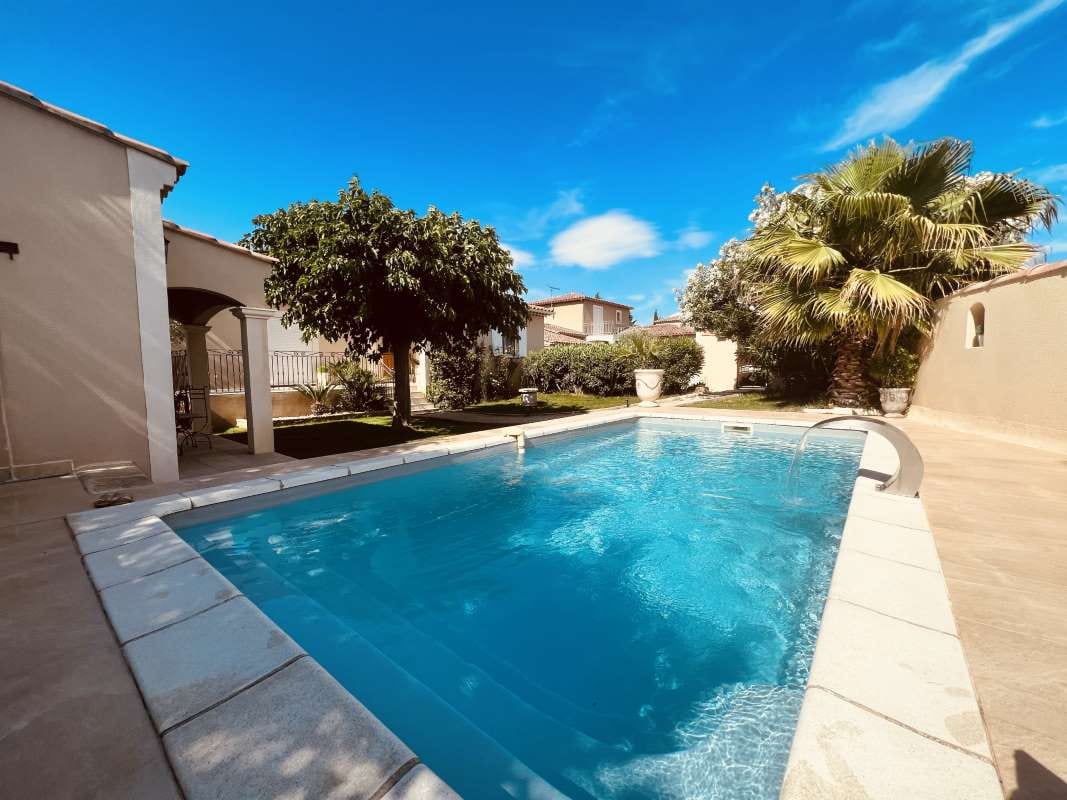
📌 Key Takeaway: Texas pool service routes in Katy, Fort Bend, Harris, Arlington, Pasadena, Richardson, and Carrollton can deliver strong gross margins when operators control stop density, chemical cost per pool, and customer retention from day one.
What Profitability Actually Looks Like in a Texas Pool Route
When pool service owners talk about profitability, the most useful number is gross margin per stop, not just total monthly revenue. In the Texas metros covered here, a typical residential weekly account bills somewhere between $140 and $185 per month, with the higher end clustered in master-planned communities around Katy, Cinco Ranch, Sugar Land, and parts of Richardson. Once you subtract chemicals (often $18 to $28 per pool per month), fuel, insurance allocation, and a labor allocation for the route, a well-run weekly account commonly returns 55 to 70 percent gross margin to the owner-operator.
That same logic shows up in Florida too. The Census ACS 2024 profile puts Florida’s median household income at $74,568, which helps explain why service-heavy pool markets there support recurring billing and professional maintenance. You can see the source directly on Data Census using the 2024-12-31 release date.
The variable that swings profit the most is route density. A tech who completes 20 stops in a day on tight neighborhood loops earns dramatically more per hour than one driving 35 minutes between accounts. Buyers who understand this prioritize compact territories, which is exactly why curated pool routes for sale in specific ZIP codes tend to outperform scattered account lists assembled piecemeal.
Katy and Fort Bend County: Master-Planned Demand
Katy and the surrounding Fort Bend communities (Sugar Land, Missouri City, Richmond) are some of the strongest residential pool markets in the state. Subdivisions like Cinco Ranch, Cross Creek Ranch, and Riverstone have high pool penetration, predictable HOA expectations, and homeowners who value a service contract over a DIY approach. The result for a service owner is steady recurring billing with low seasonal drop-off.
That income backdrop matters. In higher-income communities, homeowners are less likely to delay routine service, and they are more willing to pay for water chemistry, filter care, and small repairs before problems turn into a bigger ticket. That keeps gross margin steadier through the year and reduces the drag from skipped visits and emergency cleanups.
A practical Katy benchmark: a 40-stop weekly route inside two adjacent ZIP codes can run on a four-day schedule, leaving Friday for repairs, equipment installs, and green-pool conversions. Those one-time service tickets ($150 filter cleans, $400 to $900 salt cell replacements, $1,200+ pump swaps) often add another 15 to 25 percent on top of recurring revenue for owners who upsell properly.
Harris County and Pasadena: Volume and Density
Harris County is the largest pool market in Texas by raw account count. The advantage here is density. In neighborhoods inside the Beltway, in Spring Branch, Bellaire-adjacent areas, and Pasadena, you can build routes where most stops are within a five-minute drive of the next one. That cuts windshield time and lets a single tech handle 22 to 26 stops in a workday rather than the 16 to 18 typical of sprawling suburban routes.
Pasadena adds a useful wrinkle: a mix of older inground pools and newer builds means service techs see both standard maintenance and a steady stream of equipment-age repair work. Owners who train their staff on basic pump and filter diagnostics convert those service calls into meaningful add-on revenue without subcontracting.
The financial profile improves when a route is dense enough to hold billing without overextending the day. That is why Harris County operators who build around compact neighborhoods usually see better retention than operators chasing distant accounts across multiple zones. The route becomes easier to service, easier to protect, and easier to scale.
Arlington: A Growing North Texas Base
Arlington sits between Dallas and Fort Worth and benefits from both metros. The pool market here has been expanding alongside new residential construction, and the customer base tends to be loyal once a reliable service relationship is established. Average billing in Arlington tracks the Texas norm, and many neighborhoods (Pantego, Dalworthington Gardens, south Arlington near Mansfield) have enough pool concentration to support tight routes.
For an owner buying in, the path to profitability in Arlington usually involves consolidating accounts in two or three adjacent ZIP codes rather than chasing scattered customers across the metroplex.
That approach protects margin in a simple way. Less drive time means more completed stops, fewer fuel dollars burned, and more room in the week for repair work. In a market that sits between two large metros, that kind of route discipline matters more than chasing the biggest possible map footprint.
Richardson and Carrollton: Mature North Dallas Markets
Richardson and Carrollton are mature North Dallas pool markets with customer bases. Pools here tend to be older on average, which raises the value of an operator who can handle minor repairs in-house. Heater diagnostics, automation programming (Pentair IntelliCenter, Hayward OmniLogic), and acid washes all become meaningful revenue lines on top of weekly service.
Customer retention in these areas is strong when service quality is consistent. Owners report that homeowners who have used three or four different pool guys before settling on a reliable one rarely switch again. That stickiness is what makes the monthly recurring revenue genuinely recurring.
These markets also reward operators who keep the service experience simple and predictable. Clear communication, consistent visit timing, and fast follow-through on repairs matter because mature neighborhoods notice service quality quickly. When the route is dense and the customer base is stable, the operator can keep gross margins from slipping even when repair demand rises.
The Cost Structure Nobody Talks About Honestly
Profit projections often skip the boring line items that actually decide whether a route makes money. Realistic monthly operating costs for a 50-stop solo-owner route in Texas usually include:
- Chemicals: $900 to $1,400 depending on bulk buying and pool conditions
- Fuel: $250 to $450 with efficient routing
- Vehicle (loan or lease, maintenance, insurance allocation): $500 to $800
- General liability and commercial auto insurance: $180 to $300
- Phone, software (Skimmer, Pool Service Software, or similar), payment processing: $80 to $150
- Pole, net, brush, vac head replacements and small tools: $50 to $120
Subtract those from $7,500 to $9,000 in monthly billing and a solo operator typically nets $4,500 to $6,000 per month before taxes, while working roughly four full days per week on the route and a half-day on repairs.
The same cost discipline applies in Florida, where higher humidity, heavy rain, and year-round pool use can keep chemical demand and service expectations high. The operator who watches the weekly chemistry bill, trims windshield time, and keeps callbacks low usually protects the best margin.
Scaling From One Truck to Two
The first truck pays the owner. The second truck is where real business value gets built, because at that point you are no longer trading hours for dollars on every stop. A second tech running 45 to 50 weekly accounts at industry-standard wages plus fuel and chemicals typically contributes another $2,500 to $4,000 in monthly margin to the owner once fully ramped.
That scaling is easier when you start with a clean, dense route. Buyers who evaluate pool routes for sale with a second-truck plan in mind look specifically for territories where adding 50 more accounts in the same ZIP cluster is realistic.
In practical terms, that means the first route has to be built for expansion. If the owner can keep routing tight, maintain steady billing, and avoid spreading too far across a metro, the second truck becomes a growth asset instead of an operational headache.
How Superior Pool Routes Approaches Profitability
We have helped owners take over more than 20,000 accounts across Texas and Florida, and the consistent pattern among the most profitable operators is the same: tight territory, fast onboarding, disciplined chemical management, and proactive customer communication. Our training covers chemical balancing, equipment diagnostics, route software setup, and the conversation scripts that keep customers when a tech change happens. The accounts come with a replacement guarantee in the early window so a buyer is not absorbing the cost of normal early churn alone.
Profitability in the Texas pool business is real, but it is earned through density and retention, not assumed from headline billing numbers. Operators who treat those two metrics as the scoreboard tend to build durable, sellable businesses within their first 18 to 24 months. Florida follows the same playbook: professional service, dense routing, and steady billing hold up when the market gets noisy.
Related Articles
- How Profitable is the Pool Business: Houston, Harris County, Katy, Fort Bend County, Brownsville, Temple, and Irving, TX
- How Profitable is the Pool Business: Houston, Harris County, TX; Katy, Fort Bend County, Harris County, TX; Killeen, TX; El Paso, TX; Dallas, TX
- How to Start a Pool Cleaning Business: Katy, Fort Bend County, Harris County, Laredo, Richardson, Denton, Port Arthur, TX
- Swimming Pool Routes for Sale: Katy, Fort Bend County, Harris County, Conroe, Brownsville, Lubbock, Carrollton, TX